European Groups of Territorial Cooperation (EGTCs) in South-East Europe. New Accelerators of European Integration in the Balkans and South-Eastern Europe, by Georgios A. EMMANOUIL
The Balkan Peninsula has for decades been a space where Europe has been tested: conflicts, divisions, unstable institutions, but also strong cultural affinities, deep historical ties, and shared ecosystems that transcend borders and eras. In this context, the need emerges for practical cooperation mechanisms capable of connecting states, regions, and societies beyond historical mistrust.
The European Groups of Territorial Cooperation (EGTCs), established by Regulation (EC) No 1082/2006 and subsequently amended by Regulation (EU) No 1302/2013, constitute today perhaps the most tangible instrument of “European proximity” in the Balkans, South-Eastern Europe, and the Mediterranean. The EGTCs have proposed the design and implementation of a comprehensive framework for applying Articles 20 and 21 of the Interreg Regulation (EU) 1059/2021. This model aims to address in an optimal way the need for joint management of cross-border natural ecosystems and infrastructure.
EGTCs are not merely a technical construct of EU law; they represent the first small “islands of European integration” in a region where cooperation was for many years politically fragile. They constitute an underutilised but highly effective tool that can function complementarily—and often catalytically—as an institutional intermediary between intergovernmental cooperation and EU policies, acting as a power broker of multilevel governance.
2.8.1 The Logic of EGTCs in the Balkan and Mediterranean Context
South-Eastern Europe is a region where realities do not fit into linear frameworks. It is an area characterized by:shared rivers,
- cross-border lakes and ecosystems,
- historic settlements and shared cultural and environmental routes,
- population mobility,
- common needs in transport, energy, and health infrastructure,
- and a shared aspiration for European stability and development.
EGTCs respond to this complexity through a distinctly European approach: they establish cooperation structures that are not dependent on the climate of bilateral relations, but rather on local will, institutional continuity, and European oversight.
In this sense, they represent the most mature expression of European integration in the Balkans and South-Eastern Europe following INTERREG and the macro-regional strategies.
2.8.2 Five Dimensions of “Soft Integration”
In the Balkans, European integration is not imposed from above. It is built gradually through five parallel pathways emerging through EGTCs:
- Institutional proximity – local and regional authorities operate as equal European partners with their own legal instrument.
- Financial synergy – INTERREG evolves from a funding programme into a mechanism for genuine joint action.
- Knowledge transfer – professionals from different countries develop shared values, standards, and skills.
- Administrative convergence – improved governance, transparency, evidence-based planning, and adoption of European standards.
- Cultural convergence – shared respect for nature, heritage, history, and local identities.
This is a form of “soft integration”: not imposed, but convergent; not rhetorical, but practical.
The ecosystems concerned in the Balkans and South-Eastern Europe include, inter alia, the Aoos/Vjosa River (Greece–Albania), Prespa Lakes, Lake Doirani, Axios/Vardar River (Greece–North Macedonia), Strymonas River, Lake Kerkini, Evros and Nestos rivers, as well as the Rhodope mountain range (Greece–Bulgaria). They also include initiatives in Maritime Spatial Planning and Integrated Coastal Zone Management for Greece–Cyprus and Greece–Italy.
There is a strong need for more effective cooperation and governance in Natura 2000 and Ramsar areas, as well as for cultural and architectural heritage initiatives, including UNESCO sites. Enhanced institutional capacity and skills are required to make better use of Interreg funding instruments.
There is also a clear need to include non-profit organisations as potential EGTC members through an amendment of Regulation 1082/2006.
To further strengthen the catalytic role of territorial cooperation, complementary instruments have been introduced: EGTCs, the Border Focal Point, and the upcoming BRIDGEforEU Regulation. The objective is to reinforce territorial cooperation as a key driver of European integration.
The European Commission (DG REGIO) and national authorities should positively consider the request of EGTCs to participate in Monitoring Committees of CBC programmes (Greece–North Macedonia, Greece–Bulgaria, Greece–Albania, Greece–Cyprus, Greece–Italy), as well as in IPA and post-2027 Interreg programmes and in the Thematic Steering Groups of the five pillars of the revised EUSAIR.
2.8.3 Overview of the Current Situation of EGTCs in Greece – Balkans – Mediterranean
A. Greece
Greece and Cyprus participate in a growing number of EGTCs (Helicas, Amphictyony, Efxini Poli, Archimed, Dieta Med, Proximity, Urban Knowledge Network), focusing on:
- management of natural ecosystems,
- sustainable tourism,
- cultural routes,
- innovation, entrepreneurship, and skills,
- spatial planning and transport.
Key challenges include:
- limited awareness of EGTC tools among local authorities;
- divergence from EU practices in applying Articles 20 and 21 of Regulation 1059;
- limited institutional capacity;
- administrative delays;
- low participation of civil society;
- weak linkage with Interreg;
- understaffing of EGTCs;
- insufficient funding;
- low recognition by central administrations and limited support for EGTCs as operational partners of managing authorities.
B. Balkans / South-Eastern Europe
The region demonstrates strong dynamics:
- Greece mainly and Bulgaria have a longer tradition of EGTCs in spatial development;
- North Macedonia and Albania actively participate in environmental initiatives;
- Serbia, Montenegro, and Bosnia and Herzegovina are gradually advancing toward institutional integration.
Challenges include:
- asymmetries in administrative capacity and need for capacity-building in cross-border governance;
- political sensitivities in certain border areas;
- limited culture of multilevel governance;
- need to strengthen cross-border green governance.
EGTCs can act as catalysts for EU enlargement in the Western Balkans, functioning as institutional “sandboxes” for pilot application of the acquis communautaire.
Institutionalised participation of EGTCs in the Thematic Steering Groups of the Adriatic-Ionian Macro-Regional Strategy (EUSAIR) is essential.
2.8.4 Proposed Priorities
Priority 1: Establishment of a Coordinated EGTC Mechanism for Greece–Balkans–Mediterranean
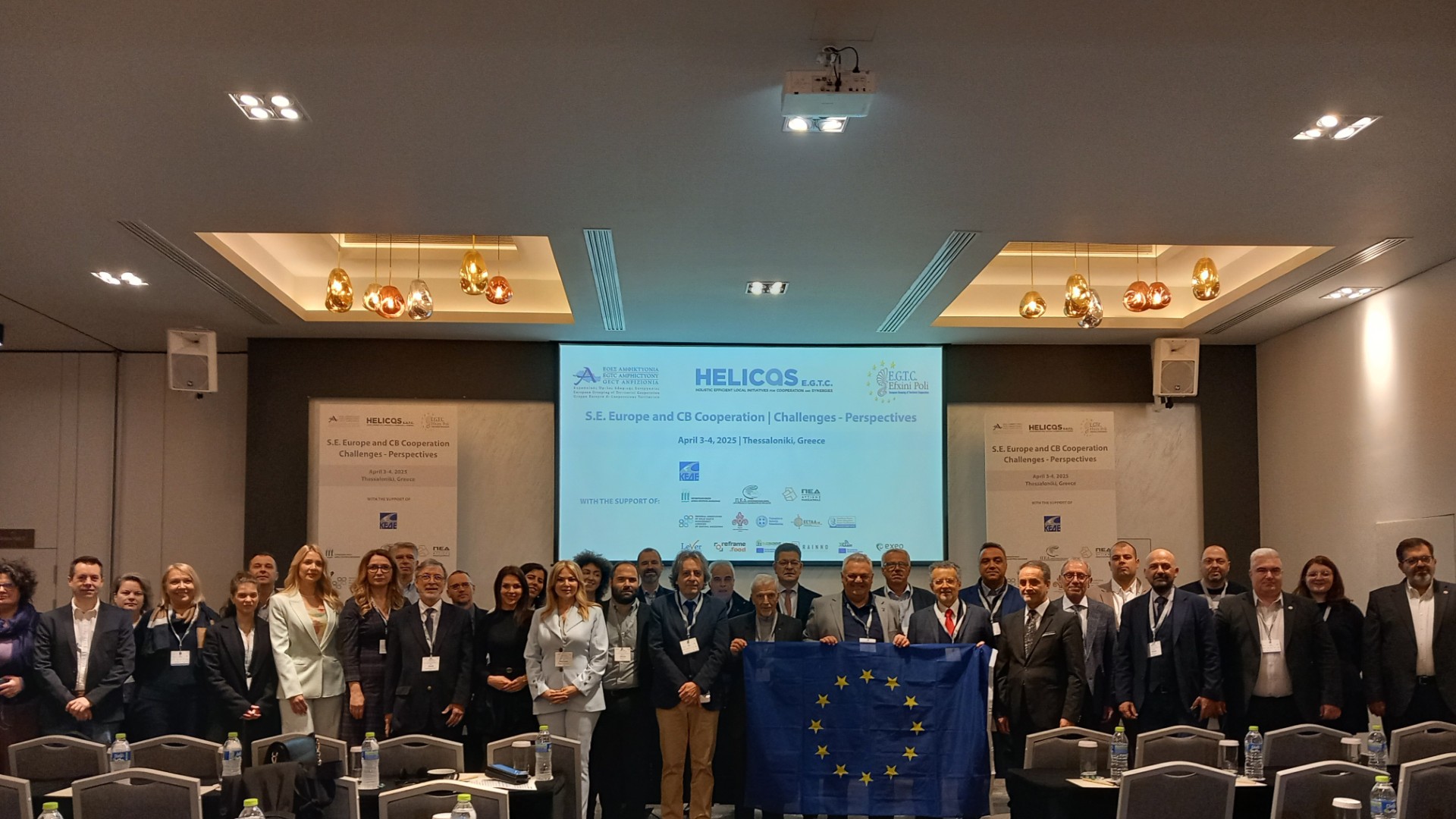
As highlighted in the conclusions of the April 2025 Thessaloniki Conference of South-East European EGTCs, there is a strong need for a structured roadmap to improve cooperation.
Key issues include:
- Visibility of available instruments;
- Effective mobilisation of stakeholders through enhanced political commitment and skills development;
- Removal of barriers hindering effective cooperation;
- Strengthening bottom-up approaches;
- Improved networking among development actors.
This requires:
- A permanent information-sharing platform;
- Alignment with the Border Focal Point and BRIDGEforEU;
- Support for new EGTCs in environmental and cultural ecosystems (e.g. Prespa region, wider Balkan and SEE area);
- An EGTC Support Facility for Greece–Balkans–Mediterranean.
Priority 2: Cross-Border Management of Natural Resources and Climate Adaptation
- Joint management plans for Aoos, Evros, Nestos, Strymonas, and Prespa.
- Use of Articles 20–21 of Regulation 1059/2021.
- Creation of cross-border observatories (water, biodiversity, risk).
- Integration of the Climate Security agenda and RescEU into EGTC activities.
Priority 3: EGTC Participation in Interreg Monitoring Committees
- Institutional upgrading of EGTCs.
- Recognition of EGTCs as implementation tools within Interreg programmes.
Priority 4: Strengthening Administrative Capacity and Training
- Creation of a Trans-Balkan Academy for Cross-Border Cooperation.
- Skills development in spatial planning, EU funds, MSP, ICZM, and cultural policy.
Priority 5: Inclusion of NGOs and Non-Profit Organisations in EGTCs
- Legislative amendment allowing NGO participation beyond the restrictive definition of “public law bodies” under Directive 2014/24/EU.
- Strengthening the social dimension of cross-border governance.
Priority 6: Joint Tourism, Environmental, and Cultural Routes
- Mediterranean gastronomy, culture, and UNESCO routes.
- Contribution to the EUSAIR Pillar on Sustainable Tourism.
Priority 7: Joint Data Production and Research Tools
- Creation of an EGTC Data Hub.
- Integration of data on FDI, trade, tourism, and infrastructure.
Priority 8: Strengthening the Role of EGTCs in EUSAIR and EU Enlargement Policies
- Participation in Thematic Groups and flagship projects (Prespa, Mediterranean Diet, Regional Education Pact).
- Support for pre-accession capacity building of local authorities.
Conclusion
Experience demonstrates that, with political commitment from local, regional, and national authorities and continued support from DG REGIO, EGTCs can play a decisive role in building networks, fostering cooperation, and promoting joint actions for sustainable development across the Balkans and South-Eastern Europe.
Reference:
European Commission (2021), EU Border Regions: Living Labs of European Integration (COM(2021) 393)
European Committee of the Regions – European Cross-Border Platform
https://cor.europa.eu/en/our-work/cooperations-and-networks/european-cross-border-platform/european-grouping-territorial-cooperation
2021 Report “EU Border Regions: Living Labs of European integration” (COM(2021)393)
European Cross-Border Platform (European Committee of the Regions):
https://cor.europa.eu/en/our-work/cooperations-and-networks/european-cross-border-platform/european-grouping-territorial-cooperation