
Despite the undisputed national, European and international progress achieved to date, the existing energy networks in Greece — and across the European Union as a whole — are no longer sufficient.
This is because, beyond the previously installed Trans-European Energy Networks, which were developed mainly on the basis of the first major relevant EU legislation successfully adopted during the 4th Greek Presidency of the Council of the EU in the first half of 2014—when the author of this article served as Chair of the Energy Working Group of the Council, with Mr. Giannis Maniatis as Minister of Energy and Professor Kostas Mathioudakis (NTUA) as Secretary General for Energy—there has been no subsequent completion or reinforcement of the major energy infrastructures in the wider Southeast Mediterranean region in the years that followed.
This occurred despite the continuously growing and pressing national, Balkan, EU, Euro-Mediterranean and international energy needs, such as:
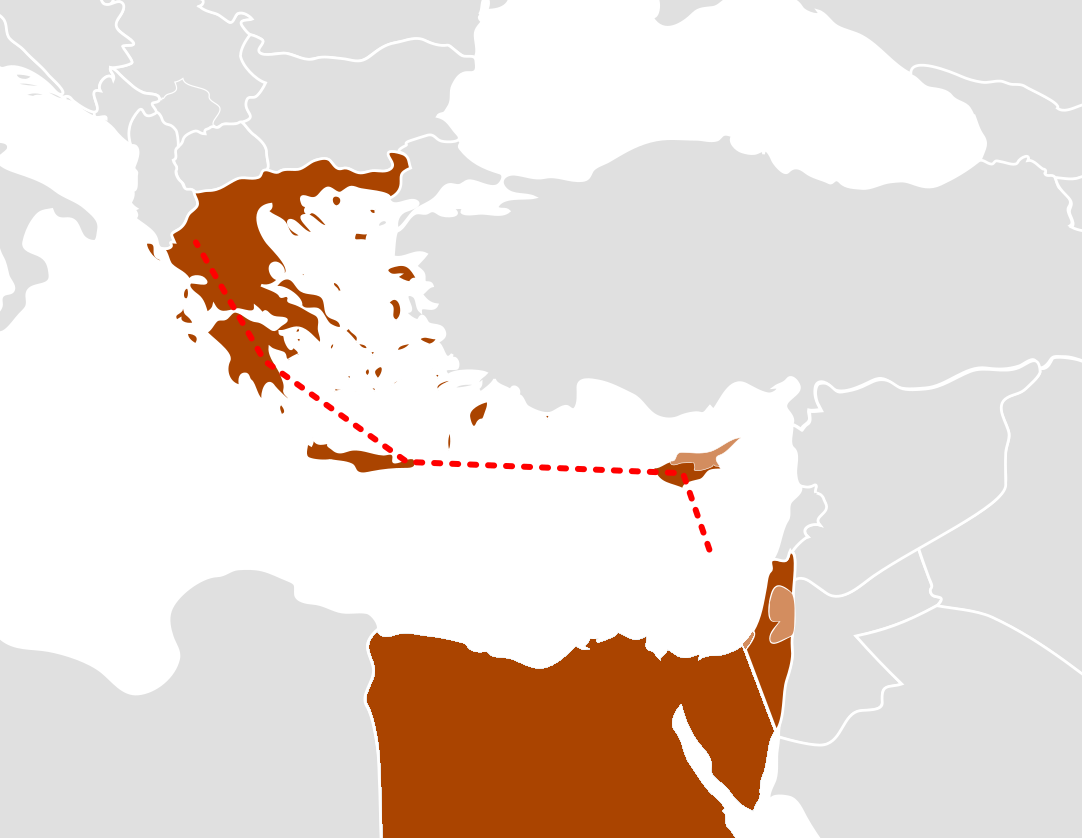
- the EastMed natural gas pipeline,
- the EuroAsia Interconnector for electricity transmission,
- the Vertical Natural Gas Corridor from Greece to the northern Balkans, primarily via the Trans Adriatic Pipeline (TAP).
This situation persists despite the intense efforts of the Greek Presidency at the European Council, which succeeded in securing unanimous EU institutional support for these projects, officially endorsed not only by the European Union but also by the United States. These efforts were necessary due to the high political complexity and extremely high investment costs of such large-scale energy interconnection projects.
At the same time, however, EU energy legislation and resources, despite its high institutional and political quality and significance, remains weak and incomplete, particularly with regard to ensuring the financing of the enormous costs required, especially for the poorer European South, which includes not only Greece but the entire region of Southeast Europe.
Energy as a Market Commodity vs. a Public Good
In parallel, in recent years — based primarily on current EU legislation — energy pricing has become linked to the highest marginal market price, with energy now treated within the EU as a tradable market commodity, rather than as a Public Service Obligation (PSO), as was previously the case under earlier EU directives.
This public-service approach was, unfortunately, effectively abolished in practice, despite the continued formal existence of a fundamental international principle upheld by the International Energy Agency (IEA), according to which energy constitutes a public good and must be protected as such.
Risks of Instability and Blackouts
As a result — and alongside other serious local, regional and international political and economic challenges marked by instability and conflict — there is an ever-present risk, not only for Greece but for the entire European Union and beyond, of extremely dangerous large-scale electricity blackouts.
These risks are comparable to those that recently occurred — fortunately on a smaller geographical scale — in Spain and Portugal, where, beyond insufficient network capacity, the combination of political instability and ongoing armed conflicts within an increasingly volatile geostrategic environment poses a growing threat to:
- adequate energy production,
- transmission,
- storage,
- and consumption across EU Member States and the wider region.
This risk is particularly acute during peak demand periods, given that European energy production still relies heavily on conventional power plants operating with mechanical rotors, rather than fully modern electronic and digital systems.
Moreover, most electricity networks remain outdated and predominantly overhead, rather than safer underground systems — a transition that was completed many years ago only in certain large EU Member States, such as France and Austria, following repeated large-scale destruction of overhead networks caused by extreme weather events.
Outlook: A Cautiously Optimistic Future
Despite these challenges, the future appears cautiously optimistic for European and global energy developments, based on the gradual deployment of advanced methods of energy production, distribution and storage, which will rely increasingly on artificial intelligence and digital technologies.
These innovations have the potential to enhance system resilience, efficiency and security — provided that adequate investment, coordinated planning and a renewed recognition of energy as a public good accompany technological progress.