The Prespa Lake Basin: A Model of Cross-Border Cooperation and Sustainable Development
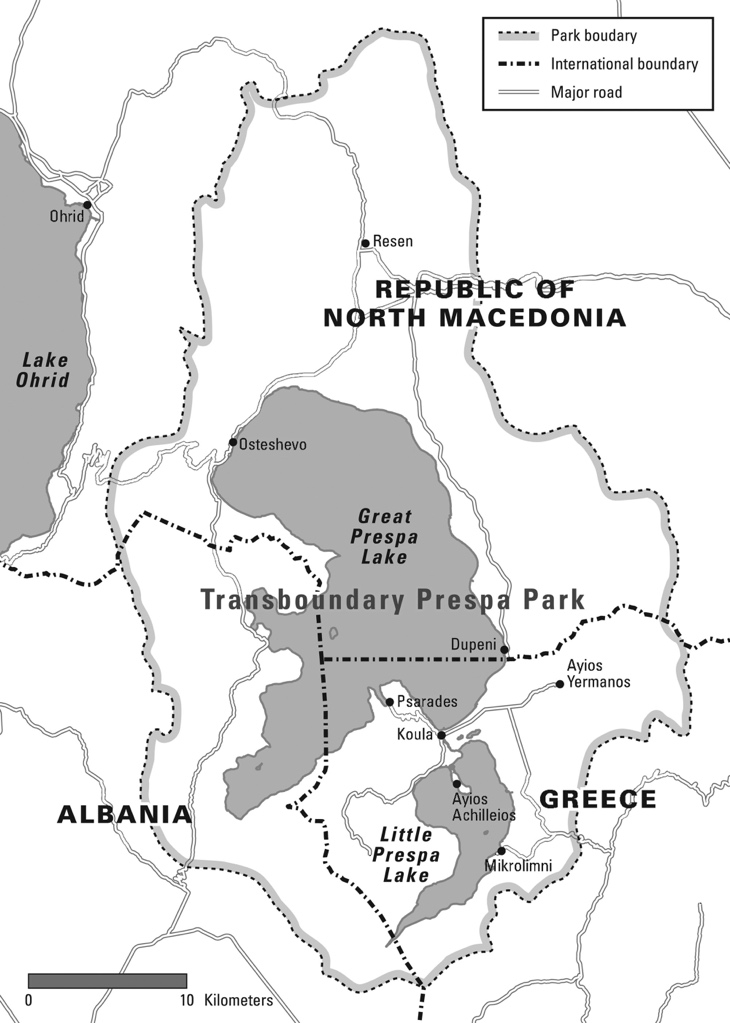
The Prespa lake basin is one of the most important natural and cultural treasures of Southeastern Europe. As a Natura 2000 and Ramsar area, and as Europe’s first Transboundary Park (1999), Prespa has become a reference point for peace, ecology, and European cooperation.
The Master Plan for the Prespa Cross-Border Border Crossing and the Sustainable Development of the Prespa Park, implemented with the support of DG REGIO, DG NEAR/ENEST, EUSAIR, and a wide network of institutions from Greece, North Macedonia, and Albania, currently represents one of the most comprehensive EU good practices in cross-border cooperation.
The plan practically integrates key European policies related to:
-
Cohesion Policy and European Territorial Cooperation (Interreg)
-
Green Transition and the Green Agenda for the Western Balkans
-
Sustainable tourism and local development
-
Climate adaptation and biodiversity protection
Total indicative budget: €50 million for projects and studies.
1. New Cross-Border Opening at Lemos (Prespa)
1.1 Infrastructure on the Greek Side
The project for the preparation and construction includes:
-
buildings for customs and border control
-
equipment and protective shelters
-
a full set of environmental, technical, geotechnical and hydrological studies
Funding:
Interreg Greece – North Macedonia 2014–2020 and 2021–2027
1.2 Infrastructure in North Macedonia
This includes the reconstruction of the Markova Noga border crossing, with:
-
modern water supply and sewage systems
-
electromechanical installations
-
fire protection systems
-
heating systems and photovoltaic energy installations
-
architectural, structural and electromechanical design studies
Funding:
Interreg Greece – North Macedonia 2014–2020 and 2021–2027
1.3 Additional Customs Infrastructure – North Macedonia
Funding:
IPA 2014–2020 / IPA 2021–2025
a. Road Connection Lemos – Border Crossing
The project includes comprehensive:
-
technical studies
-
environmental studies
-
geological and topographical studies
-
transport engineering studies
Funding:
Studies:
Just Transition Programme of Western Macedonia 2014–2020
Construction:
Regional Operational Programme of Western Macedonia and national funds 2021–2027
b. Upgrade of the Lemos Settlement
Objective:
Urban regeneration, upgrading and sustainable development of the settlement, creating attractive conditions for visitors and residents.
Funding:
Regional Operational Programme of Western Macedonia (2014–2020 and 2021–2027)
c. Master Plan for the Sustainable Development of Prespa Park
This is the most emblematic component of the plan, functioning in synergy with the other projects.
It includes:
-
A car-free zone around the lakes
-
Floating platforms and soft infrastructure for eco-tourism
-
Solar-powered electric boats for ecological tours
-
Integration with local high-quality food production and gastronomy
-
Promotion of local architecture and biodiversity
-
Support for the recognition of Prespa as UNESCO intangible cultural heritage
Funding:
-
IPA 2014–2020
-
Synergy with the EU Prespa Fund: €21,726,000 supporting the Green Agenda for the Western Balkans
d. Institutional Implementation Network
The Prespa Master Plan represents one of the most complex examples of multi-level governance in Europe.
A total of 17 institutions participate, including:
-
Joint Expert Committee of Greece – North Macedonia
-
Interreg Managing Authority / Working Group
-
Region of Western Macedonia
-
Municipality of Prespa (Greece) and Municipality of Resen (North Macedonia)
-
European Union through DG REGIO, EU Delegations, UNDP, Ministry of Macedonia–Thrace, and EGTCs
-
Joint Working Group established in 2025
-
Prespa Park committees and environmental organisations
- Society for the Protection of Prespa
This cross-border governance model is already recognised by the EU as a good practice of territorial governance in the Balkans.
The Prespa Master Plan Represents
✔ One of the most comprehensive implementations of EU Cohesion Policy in the Western Balkans
✔ A model of ecological management, sustainable tourism and local development
✔ A laboratory of multi-level governance and cross-border cooperation
✔ A concrete example of how the EU builds peace, development and trust through projects
✔ A practical implementation of the Green Agenda for the Western Balkans
✔ A model for future interventions in the Adriatic-Ionian region and the Euro-Mediterranean area
A path as a priority for establishing a transboundary Leader type CLLD initiative, an EGTC and an EUSAIR flagship project in the area towards 2027-2034 programming period: https://emmanouilreview.eu/prespes-ena-zontano-ergastiri-synergasias-sta-valkania-tou-michali-petrakou-epistimonikou-synergati-dimou-prespon/
Prespa can become a true success story, demonstrating that European integration is not an abstract concept but a set of concrete projects that transform local communities and people’s lives.
Prespa as a Model of European Cooperation and the Historic Impetus of the 2018 Agreement
The Prespa case demonstrates clearly that European integration advances not only through treaties and councils but through concrete cooperation among people, institutions and local communities.
The Prespa Master Plan, involving 17 institutional actors and three countries in consultation and implementation—despite the still limited participation of Albanian authorities—today represents one of the clearest examples of how the EU can function as a force for peace and regional development in the Balkans.
However, this level of trust would not exist without the most decisive political step of recent decades:
the Prespa Agreement (2018) between Greece and North Macedonia.
The Agreement:
-
opened the path for the normalisation of Balkan interstate relations through the European perspective of North Macedonia and the rules that accompany it
-
stabilised a particularly sensitive region
-
created institutional tools for cross-border cooperation, with positive impacts expected in tourism, agri-food production, biodiversity protection, and the preservation of the unique environmental and cultural landscape of the wider Prespa region
-
allowed European programmes to be activated rapidly, with a level of consensus and scale previously impossible
Our more than ten years of cooperation with institutions in North Macedonia has shown that the creation of “social capital” based on mutual trust is built through the acceptance of common win-win rules and European principles and values, producing strong multiplier effects.
Prespa: Infrastructure as a Symbol of Reconciliation
Today, projects such as:
-
the new cross-border station
-
the upgrade of road access
-
the regeneration of Lemos village
-
the large sustainable development plan for Prespa Park
are not merely infrastructure projects under development with a completion horizon of 2029.
They are symbols of reconciliation, shared responsibility, and a new European identity in the Balkans.
Prespa and the Progressive Vision for the Region
For the progressive forces of the region, Prespa demonstrates something deeper:
When societies choose cooperation instead of nationalist confrontation,
when they invest in shared development instead of fear,
sustained constructive cooperation and peace cease to be utopian ideas and become concrete political and programmatic realities.
The Prespa of 1999 (Transboundary Park),
the Prespa of 2018 (International Agreement under the UN and EU framework),
and the Prespa of 2018–2025 (Master Plan)
are three milestones of the same journey:
the journey toward a Balkans that becomes part of a future Europe that is ecological, democratic, and socially just.