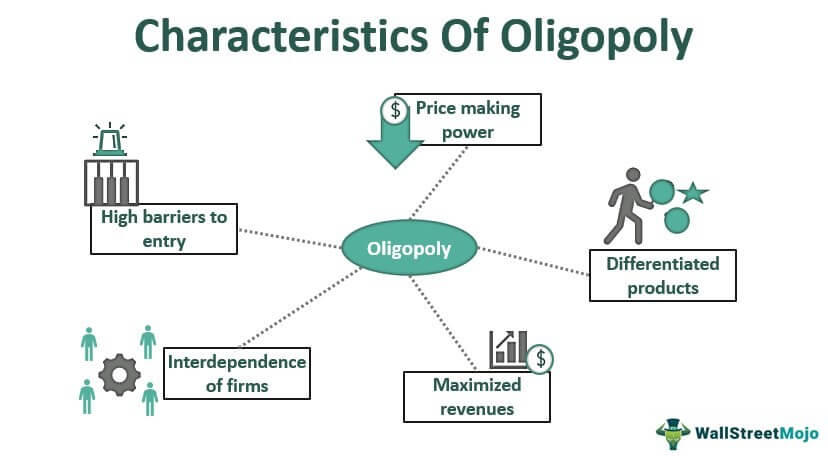
The proper functioning of healthy markets is a fundamental prerequisite for sustainable development, democratic stability, and social cohesion. However, in Greece and several countries of Southeastern Europe, there is a high concentration of power in key sectors such as food, agricultural inputs (seeds, fertilizers, pesticides, animal feed), energy, and the media. This excessive concentration leads to price distortions, pressure on producers’ incomes, limited consumer choice, and, in many cases, the undermining of democratic institutions.
The European Union has a strong legal framework. Article 101 of the Treaty on the Functioning of the European Union (TFEU) explicitly prohibits agreements and cartels that restrict competition. Article 102 TFEU prohibits abuse of dominant position. Regulation (EU) 1/2003 grants national competition authorities significant enforcement powers. The EU Merger Regulation (139/2004) enables the control of mergers that create excessive concentration at the EU level. The framework exists. It is adequate at Union level; however, its effectiveness depends on political will, resource capacity, and the independence of national authorities.
Agri-food chain: unequal conditions and “silent” cartels
In the food supply chain, the imbalance in bargaining power between producers and retailers is structural. Directive (EU) 2019/633 on Unfair Trading Practices (UTPs) was introduced precisely to address late payments, unilateral contract changes, and abusive practices against producers and consumers. However, its implementation remains uneven across Member States and has limited deterrent effect in certain markets.
At the same time, the market for agricultural inputs is globally controlled by a small number of multinational companies. This is not only a matter of prices—it is an issue of food sovereignty. Through state aid rules and the Common Agricultural Policy (CAP), the EU has the capacity to support cooperative, public research, and production structures to reduce dependency. The key question is why both the EU and national authorities do not fully pursue this option.
Energy: liberalisation without real competition
The energy market has supposedly been “liberalised” through the directives of the Third Energy Package and now operates under Regulation (EU) 2019/943 on the internal electricity market. However, in smaller markets such as Greece and Southeastern Europe, concentration remains high, and price-setting mechanisms are often opaque.
The EU also has REMIT Regulation (1227/2011) to prevent market manipulation in energy markets. The issue is not the lack of tools, but the capacity to enforce them effectively. The energy transition cannot be built on oligopolistic foundations.
Media: economic concentration and democratic deficit
Media ownership concentration is not merely a market issue—it is a matter of democracy. The recent European Media Freedom Act (Regulation (EU) 2024/1083) seeks to enhance transparency of ownership and protect journalistic independence. Without effective implementation, media markets in Greece and Southeastern Europe will remain arenas of entanglement between economic and political power.
What needs to change – policy priorities
1. Strengthening Independent Competition Authorities
There is a need for institutional and operational strengthening of national competition authorities, with adequate staffing, digital market monitoring tools, and transparency in decision-making. In Southeastern Europe—where markets are smaller and often more “closed”—stricter supervision of mergers, collusion, and abuse of dominance is required. Cross-border cooperation between competition authorities must be enhanced, particularly in energy and food markets.
2. Competitive and transparent energy markets
The energy crisis highlighted the vulnerability of markets with limited competition. Key measures include:
- Strong regulatory oversight (e.g. national regulators such as RAE and equivalents)
- Transparency in wholesale markets and pricing mechanisms
- Promotion of energy communities and decentralized productionhttps://emmanouilreview.eu/oi-energeiakes-koinotites-axiopoioun-tis-ananeosimes-piges-energeias-kai-tin-energeiaki-dimokratia-tou-christou-vrettou-ypefthynou-politikis-stin-evropaiki-omospondia-energeiakon-koinotiton-rescoo/
- Separation of production, distribution and supply where necessary
- Regional integration of energy markets to avoid national “closed” oligopolies
3. Activation of Article 116 TFEU
Article 116 TFEU (distortion of competition due to national regulations) should be activated where Member States maintain regulatory frameworks that protect closed market systems.
4. Transparency in the food value chain
In the agri-food sector, the imbalance of power between producers and retailers facilitates oligopolistic practices. Measures should include:
- Mandatory disclosure of cost structures and profit margins for key goods
- Price observatories with real data at producer, wholesale and retail levels
- Strict enforcement of the UTP Directive
- Strengthening collective producer organisations (cooperatives, producer groups, social economy entities, interprofessional organisations, regional agri-food partnerships)
- Monitoring and regulation of agricultural input markets, including pricing practices of importers and distributors, and support for local alternatives
5. Media pluralism and transparency
In the media sector, ownership concentration affects democratic functioning. Required actions include:
- Transparency in ownership and financing of media
- Limits on concentration and strict merger control
- Transparent rules for state advertising
- Support for independent journalism and local/regional media
6. Linking EU funding to competition and transparency rules
European funding should be linked to compliance with competition and transparency rules through conditionality mechanisms. The use of the EU competition framework, the Digital Markets Act, state aid rules, and conditionality tools can act as safeguards against market distortions.
Conclusion
Combating oligopolies is not anti-market—it is a prerequisite for a healthy market. Without real competition, there is no innovation. Without transparency, there is no trust. And without trust, economic concentration becomes a democratic and social problem.
Addressing oligopolies is not only an economic issue—it is a matter of social justice, resilience, and democracy. Sustainable development in Southeastern Europe requires markets that operate with transparency, accountability, and fair competition, ensuring protection for both producers and citizens.